Updated: Apr. 21, 2026
HIDA Overview
The Hospital Infections Disclosure Act (HIDA), passed by the South Carolina General Assembly in May 2006, requires hospitals to report specific types of health care-associated infections (HAIs) to DPH. DPH compiles and analyzes the data to provide a final, validated report to the General Assembly, by Apr. 16 of each year. DPH then publishes that report to its website.
Acute care hospitals (ACH), critical access hospitals (CAH), inpatient rehabilitation facilities (IRF), and long-term acute care hospitals (LTACH), are required to annually report surgical site infections (SSI), central line-associated blood stream infections (CLABSI), Clostridioides difficile infection (CDI) LabID events, Methicillin-resistant Staphylococcus aureus (MRSA) Bacteremia LabID events, catheter-associated urinary tract infections (CAUTI), ventilator-associated events (VAE), and pediatric ventilator-associated events (PedVAE) data to the National Healthcare Safety Network Patient Safety Component. SSI data is not all inclusive as it only includes procedures required for reporting per HIDA. VAE and PedVAE data are not published in the annual HIDA report.
DPH and the HIDA Committee remain committed to reducing HAIs in health care settings and improving the health of South Carolinians. We continue to support our hospital partners via infection prevention and control (IPC) guidance, resources, and NHSN technical assistance.
Standardized Infection Ratio (SIR)
The standardized infection ratio (SIR) is calculated by dividing the number of observed events by the number of predicted events. The number of predicted events is calculated using probabilities estimated from negative binomial models constructed from 2015 NHSN data, which represents the baseline population, and referred to hereon as the 2015 NHSN Baseline.

2024 HIDA Report
Note: Starting with the 2024 HIDA Report, the Healthcare Personnel Influenza Vaccination Report will be included as Addendum D to the annual HIDA Report.
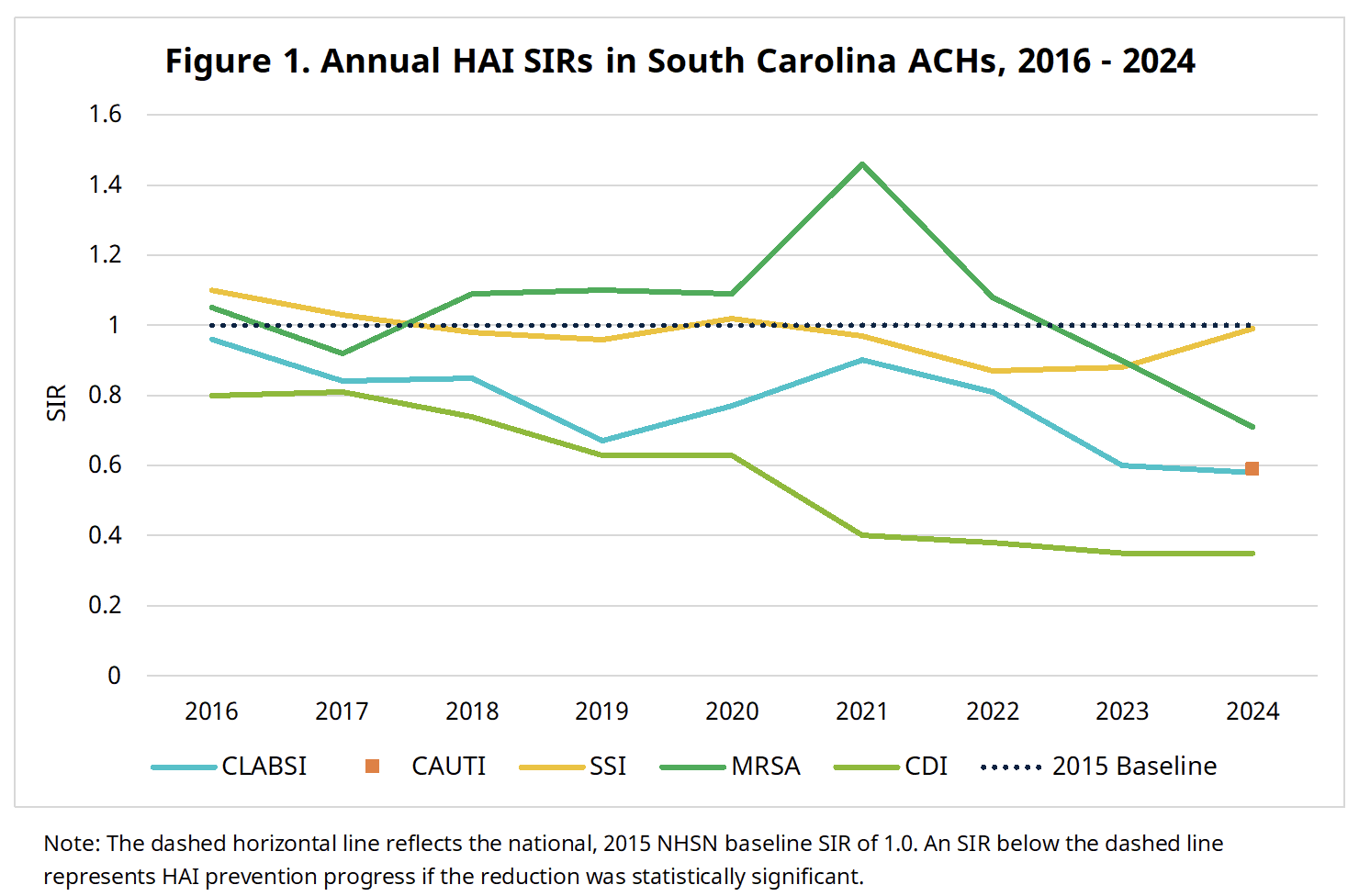
Since 2016, South Carolina has successfully reported standardized infection ratios (SIR) less than 1.0 for CLABSI and CDI LabID events, seen in Figure 1. Fluctuations are seen among the annual HAI SIRs, with notable decreases in 2022. In 2023 and 2024, CLABSI, MRSA, CDI, and SSI SIRs were all below the 2015 NHSN baseline. CAUTI SIR data for years prior to 2024 have not been validated and are therefore excluded from the SIR comparison in Figure 1.
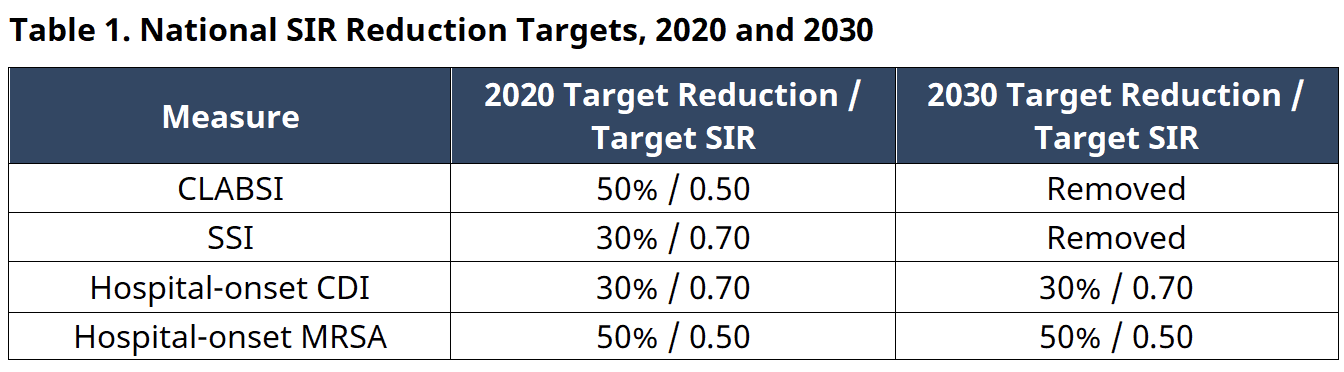
In 10-year cycles, the U. S. Department of Health and Human Services (DHHS) publishes national SIR Reduction Target goals (Table 1), which prioritize addressing emerging health concerns, promoting equity in health care, and improving well-being. The Healthy People 2030 goal of reducing health care-associated infections is centered around SIR target reductions for CDI and MRSA Bacteremia LabID Events.
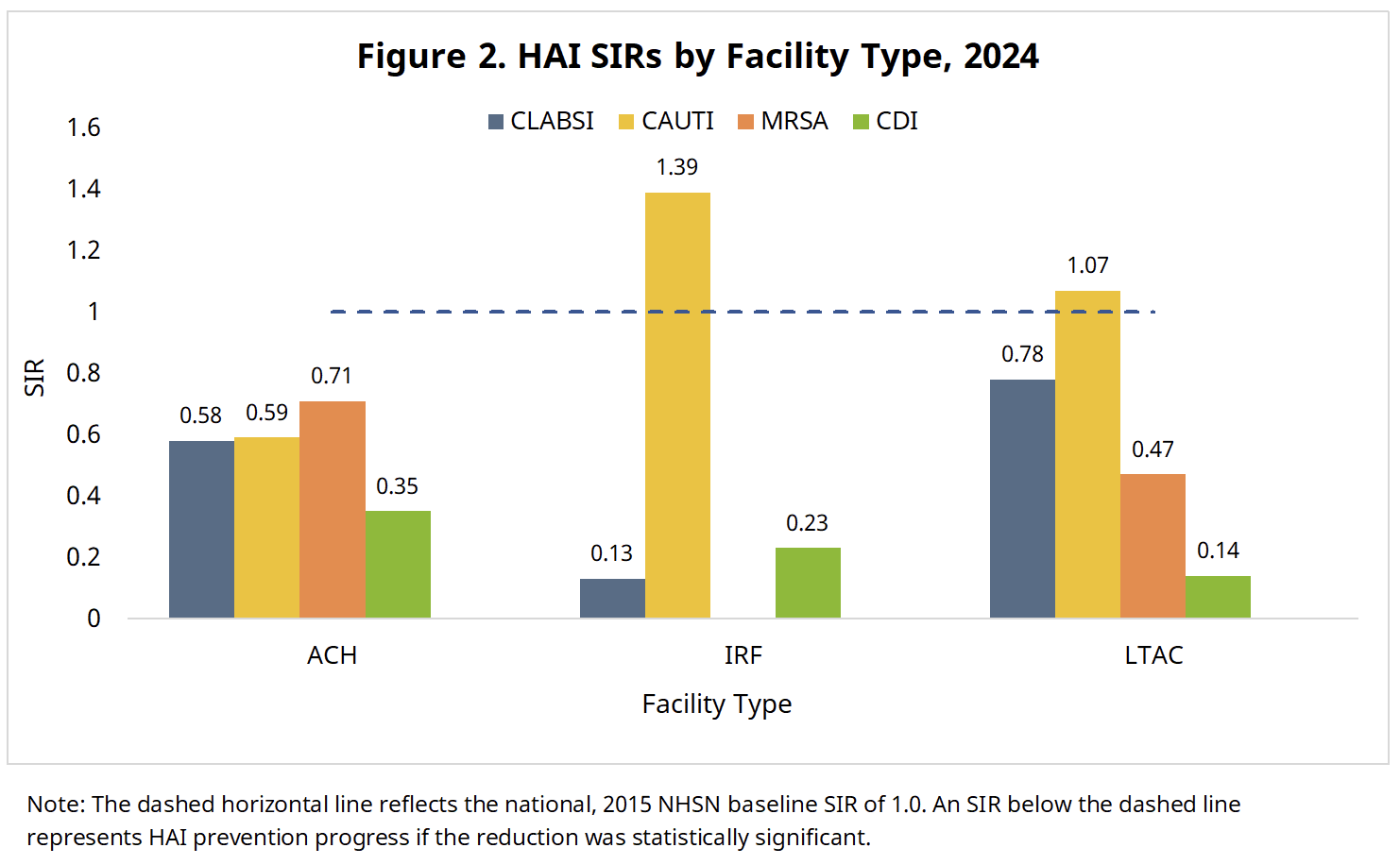
CLABSI, CAUTI, MRSA, and CDI LabID event SIRs are presented in Figure 2 and are stratified by facility type. The majority of HAI events reflected an SIR less than 1.0, indicating that fewer infections occurred than were expected, suggesting improvements in patient care and outcomes.